S-44-10 (OLD UNION ROAD) Bridge
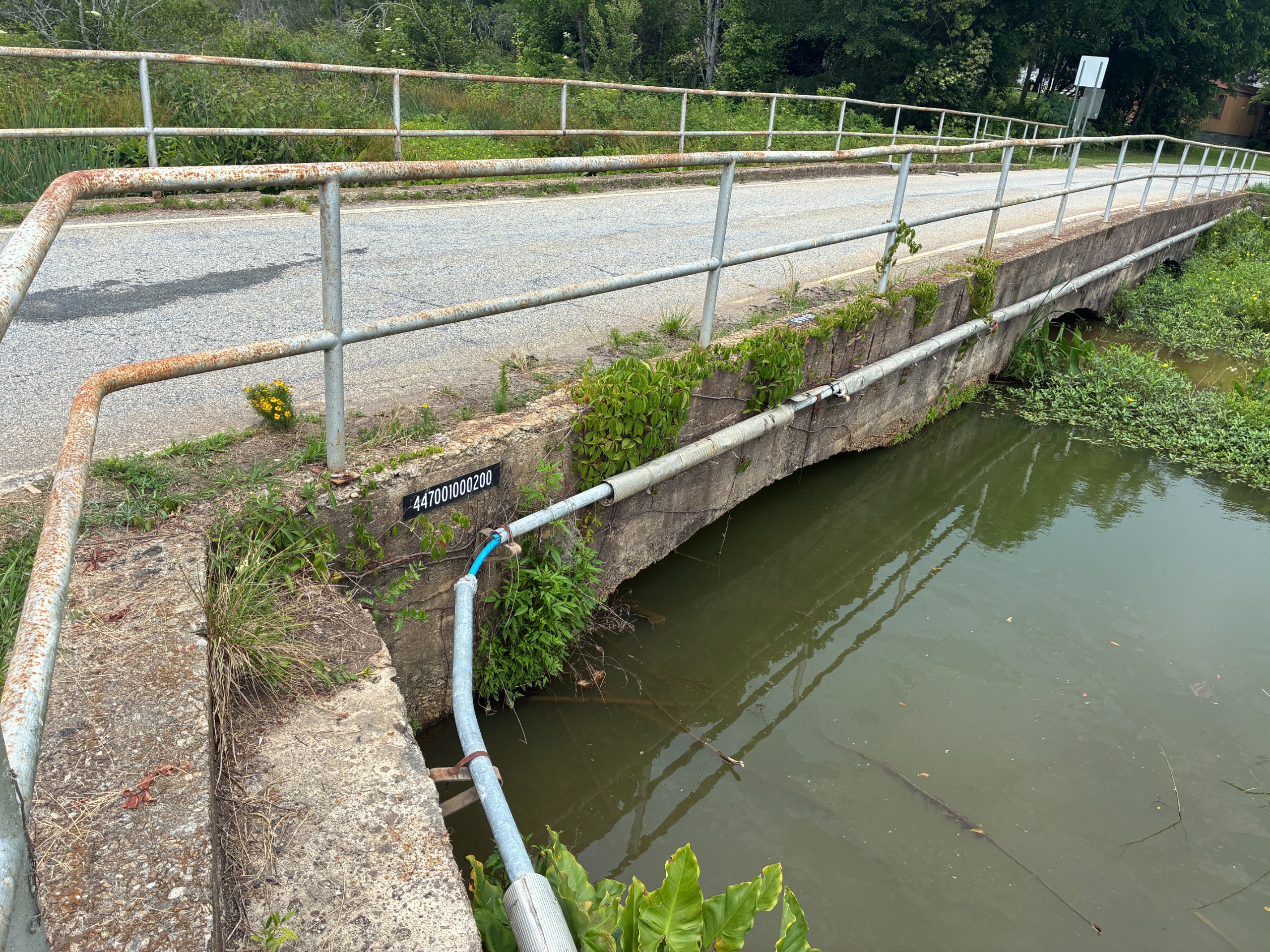
Bridge No: 4470001000200
Asset ID: 468
County: Union
Bridge Name:
Facility Carried: S-44-10 (Old Union Road)
Feature Intersected: Unnamed Stream
Year Built: Circa 1920
Year Reconstructed:
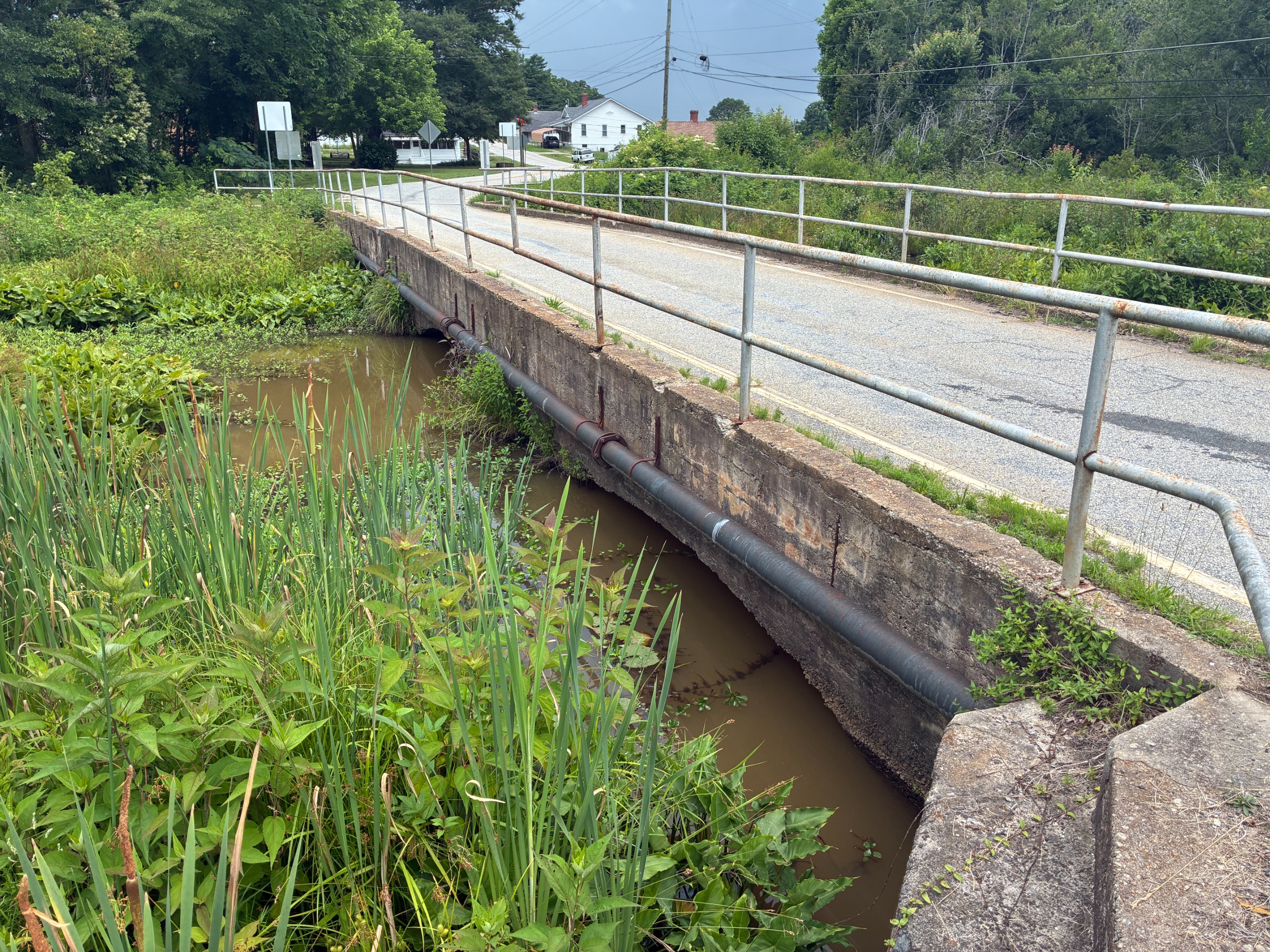
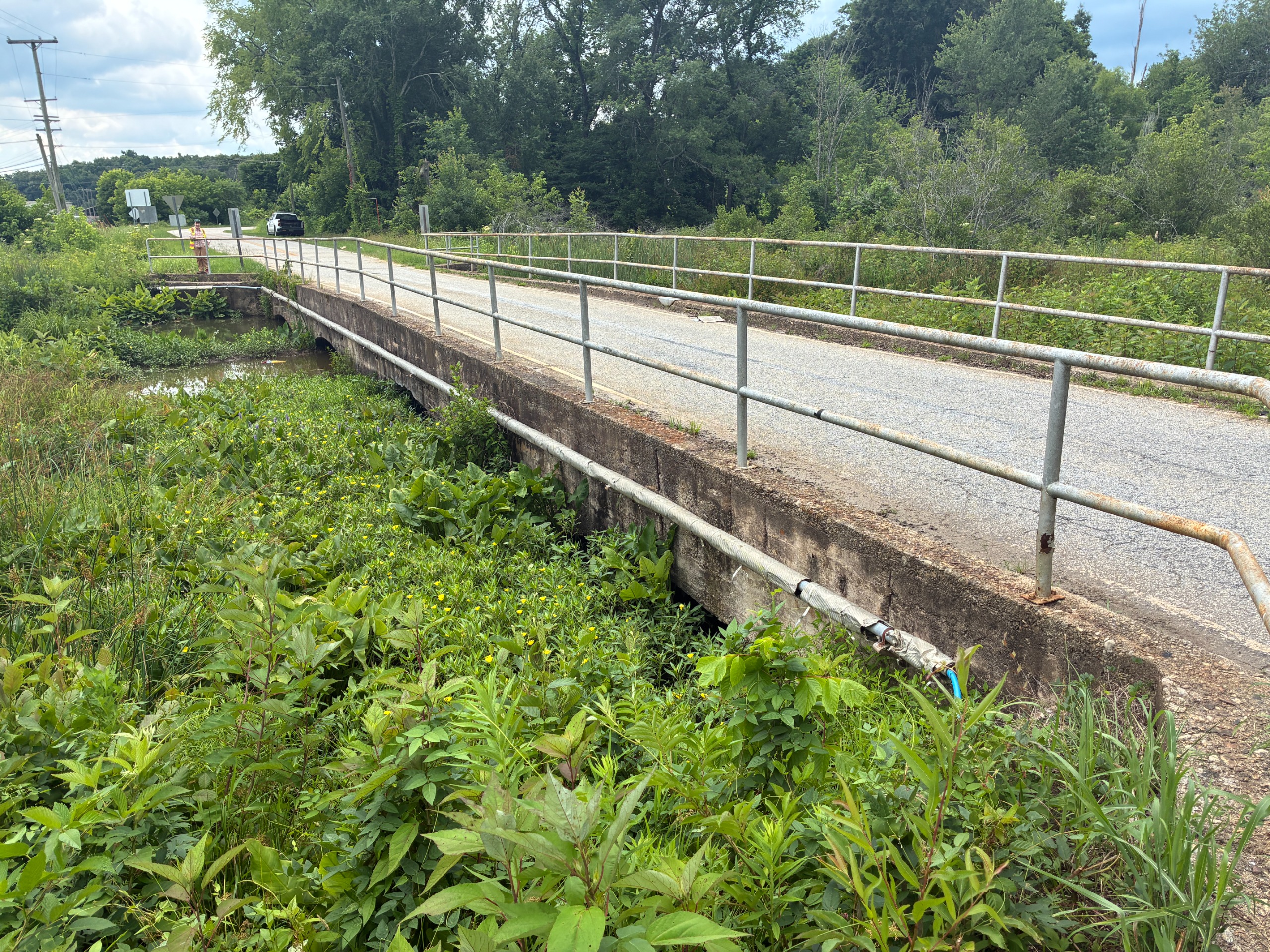
Main Structure Type: Deck arch
Design: Ribbed
Main Material: Reinforced concrete
Railing Type: Pipe railings
Number of Main Spans: 4
Number of Approach Spans:
Approach Type:
Structure Length: 100 feet
Structure Width: 16.1 feet
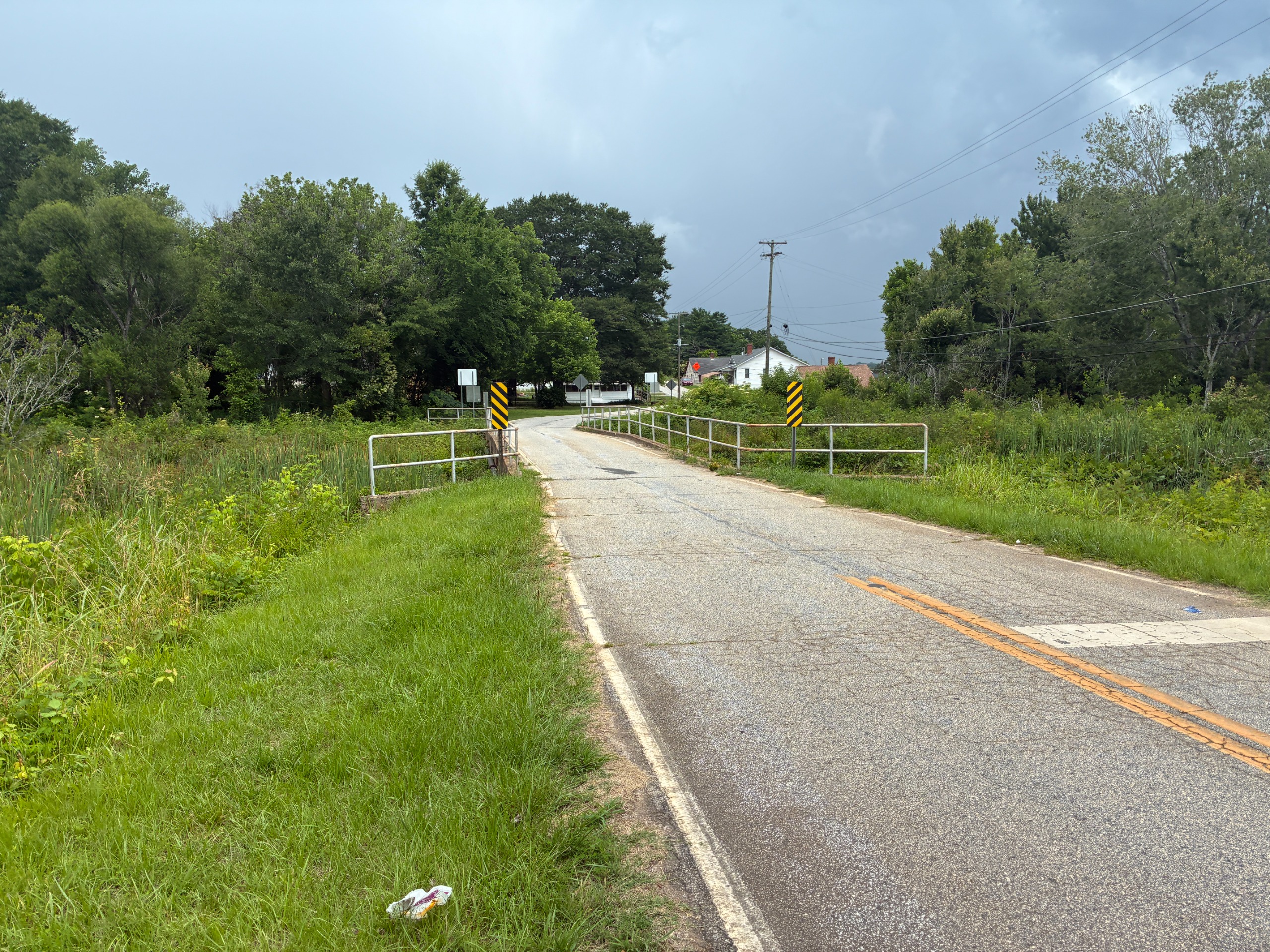
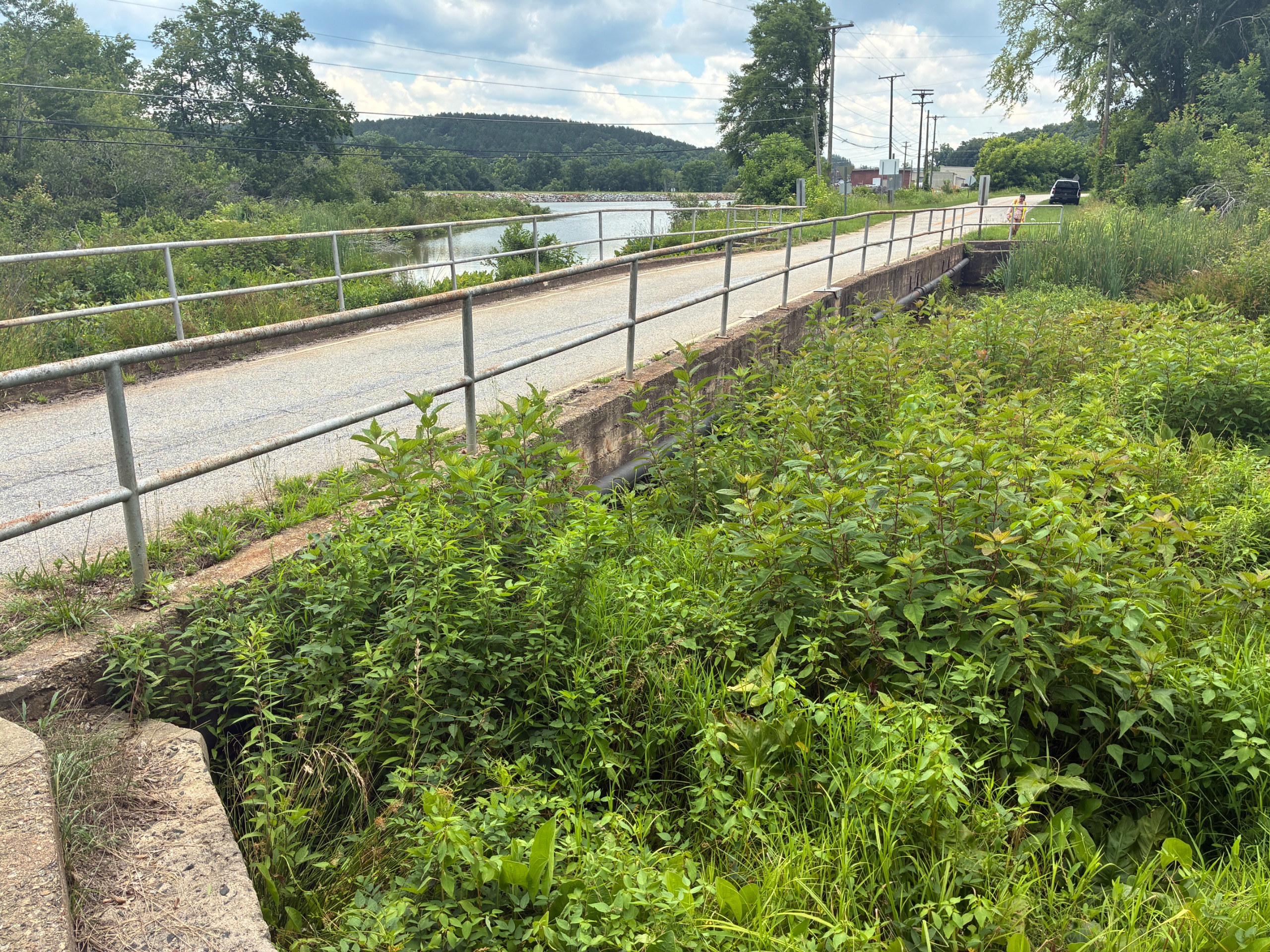
Setting: The bridge caries 1 lane of a 2-lane road over a stream in a residential setting in the town of Lockhart. It is on the south side of the mill village.
Bridge Description
The 4 span, 100'-long reinforced concrete deck arch bridge has 2 rail high pipe railings.There are no underneath views of the bridge, but if it is like 4440000900400, it has ribs.It appears to be complete.
Significance
The bridge is historically associated with the 1918-1920 improvements to the Lockhart Canal that supported the Milliken & Company’s Lockhart Textile Mill and their wholly owned subsidiary Lockhart Power Company.The power house, with its five vertical shaft Francis turbines that were rehabilitated in the late 1980s, is located to the south of the bridge.It appears that the bridge is the same design and was built at the same time as 4440000900400.That bridge was determined by SCDOT and SC SHPO in 2010-11 to be a contributing resource to the potential Lockhart Mill Village Historic District.Based on its association with the mill and community, the Old Union Road bridge is also a contributing resource to the historic district. The mill village was recommended not eligible in the 2005 Historical and Architectural Survey of Union County.Many, if not most, of the houses have are highly altered, but other aspects of integrity remain.
The power company was incorporated by an act of the state legislature in 1912, and it is still in operation.The canal, which also provided water to the now-demolished Lockhart Textile Mill (closed in 1994) located to the north on the east side of the canal, was initially developed in the 1820s as part of the Broad River navigation system.It had six lift locks and one guard lock constructed of granite.The navigation canal ceased operations in 1849.In 1894, the old canal was enlarged to supply water for the first textile mill at the falls at Lockhart. In 1918, 1.5 miles of the canal were modified again, and construction of the current power house was begun. It was completed in 1920, and it continues to provide electric power to Union, Cherokee, Chester, Spartanburg and York counties. The power house, Francis turbines, if still in place, and canal appear to meet the National Register of Historic Places criteria under criteria A and C and should be contributing resources to the historic district.The canal and power house are historically significant in association the history of Lockhart, textile mills in South Carolina, and water power.The bridge over the weir or overflow is a contributing resource to the larger historic district because it is an original feature of the 1918-1920 development of the hydroelectric facility and its impact on the community and region.