S-32 (Old Calhoun Falls Road) Bridge
Bridge No: 0170003200400
Asset ID: 160
County: Abbeville
Facility Carried: S-1-32 (Old Calhoun Falls Highway)
Feature Intersected: Calhoun Creek
Year Built: 1924
Main Structure Type: T Beam
Design: Continuous
Main Material: Reinforced Concrete
Railing Type: Rail High Concrete Railings
Number of Main Spans: 4
Structure Length: 180 feet
Structure Width: 20 feet
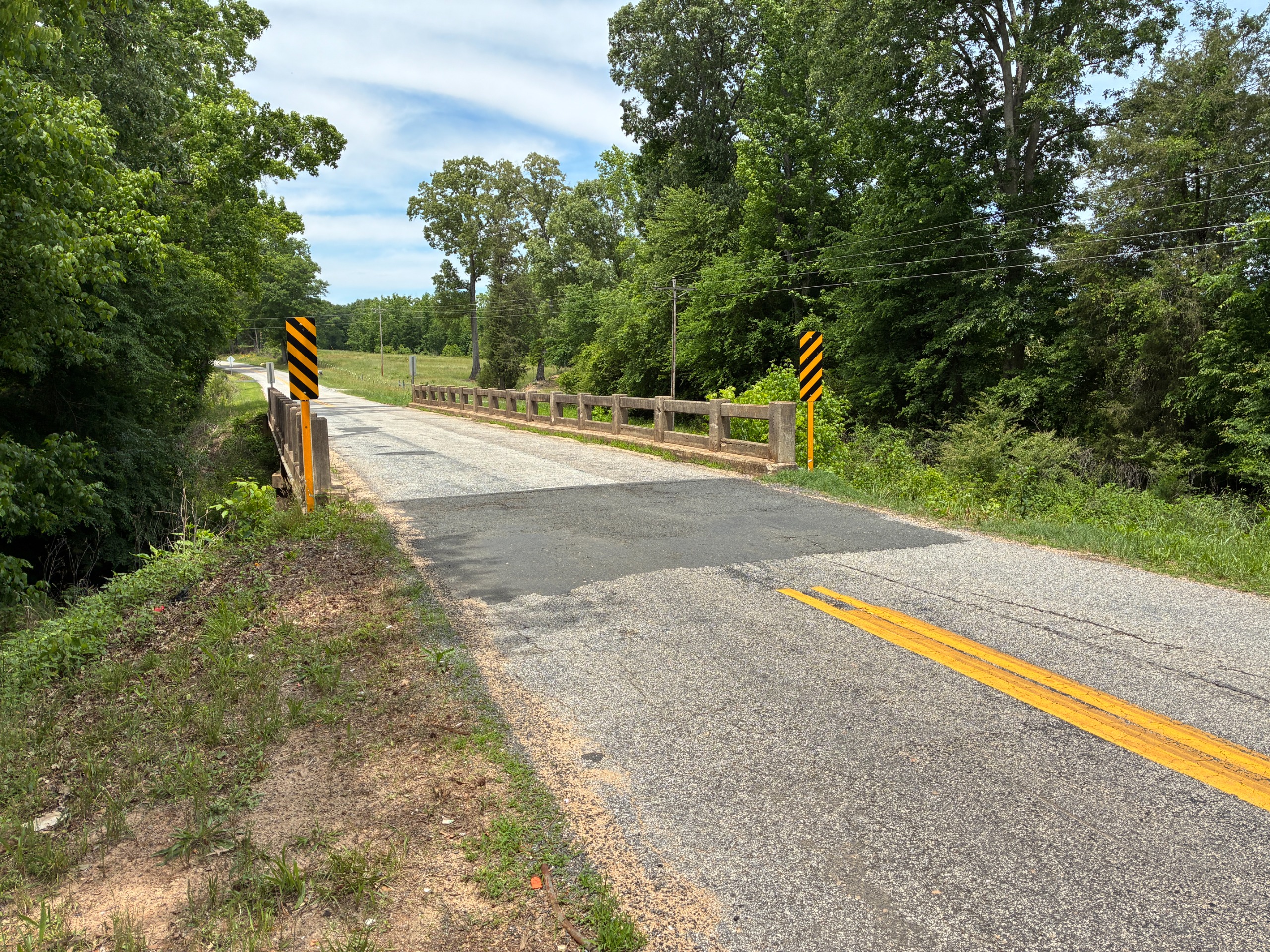
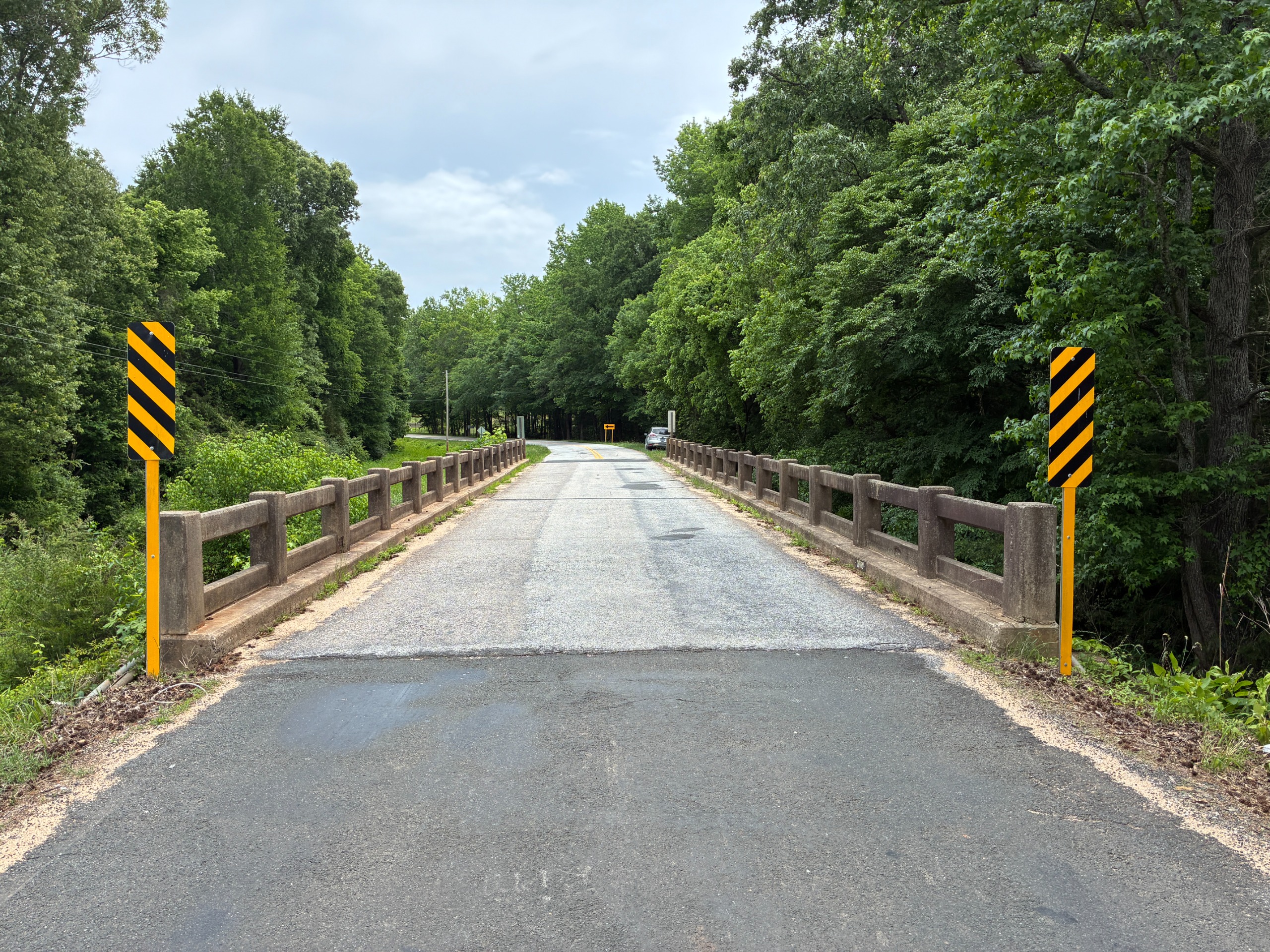
Setting: The bridge carries a 2-lane road over a stream in a wooded rural setting. It is the easternmost of two 1924 bridges placed when the state improved the route as SC 7 between Abbeville and Calhoun Falls in Abbeville County (see 0170003200200). The road retains its period geometry with an 18'-wide roadway and unimproved shoulders.
Bridge Description
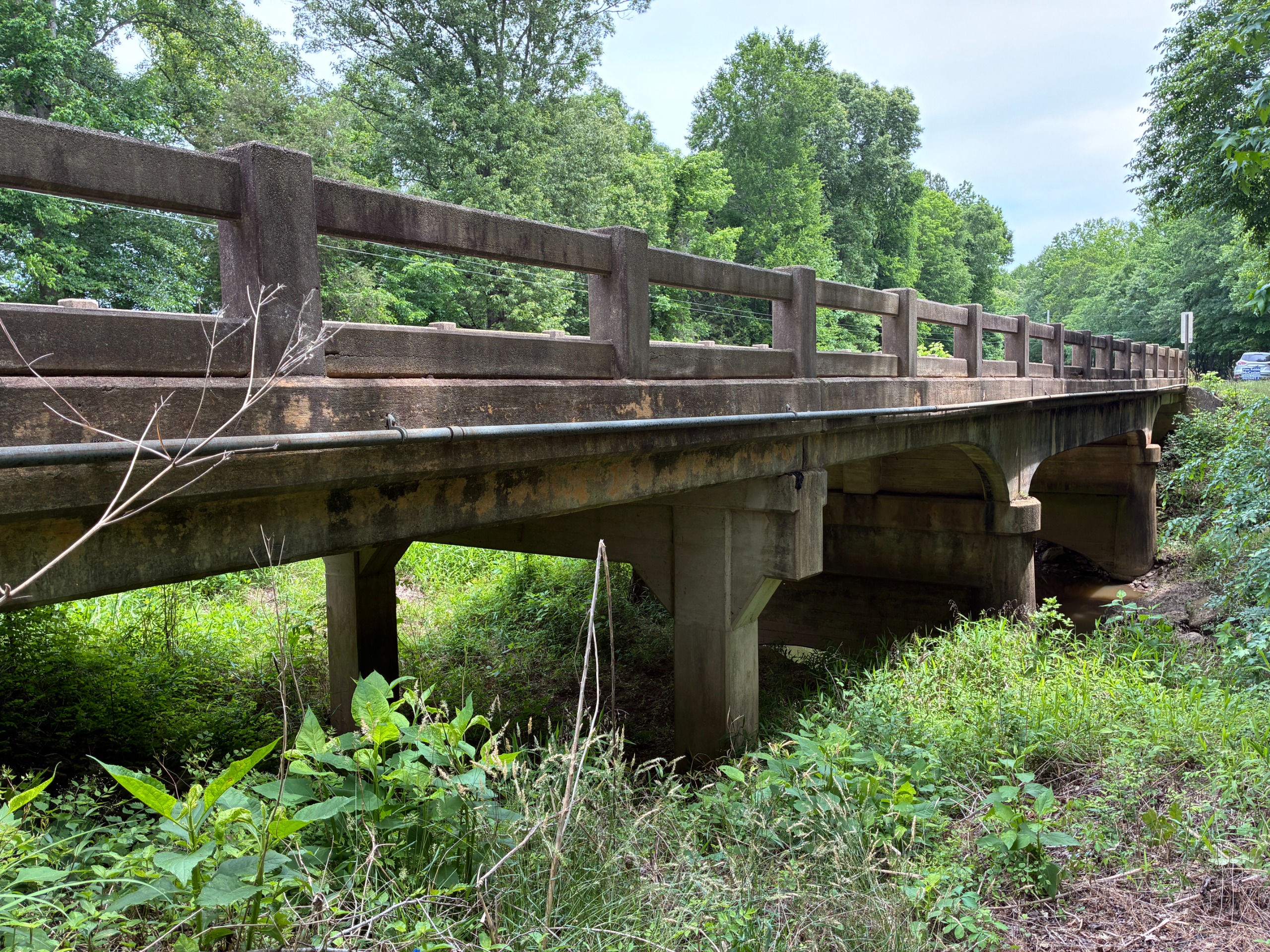
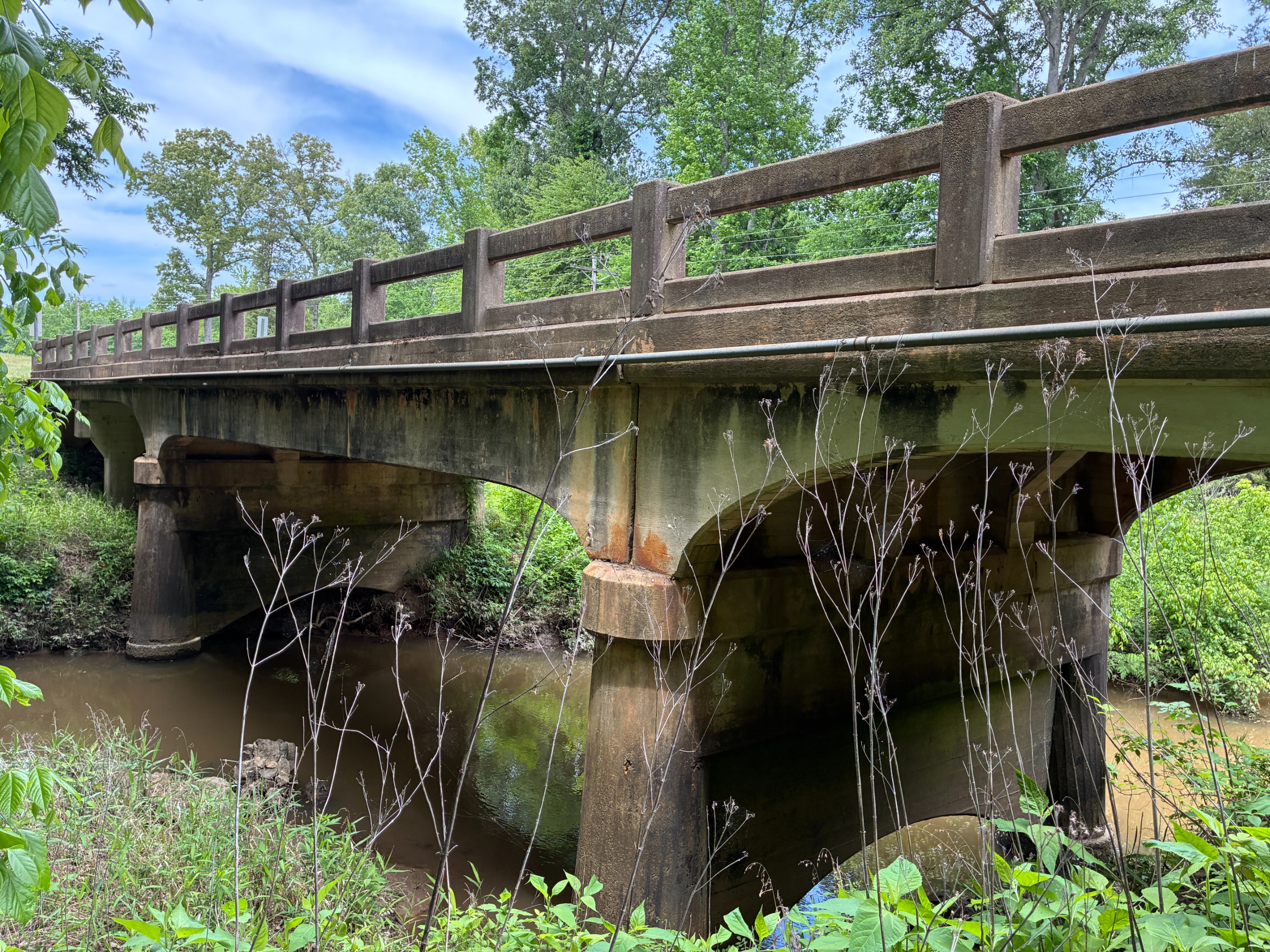
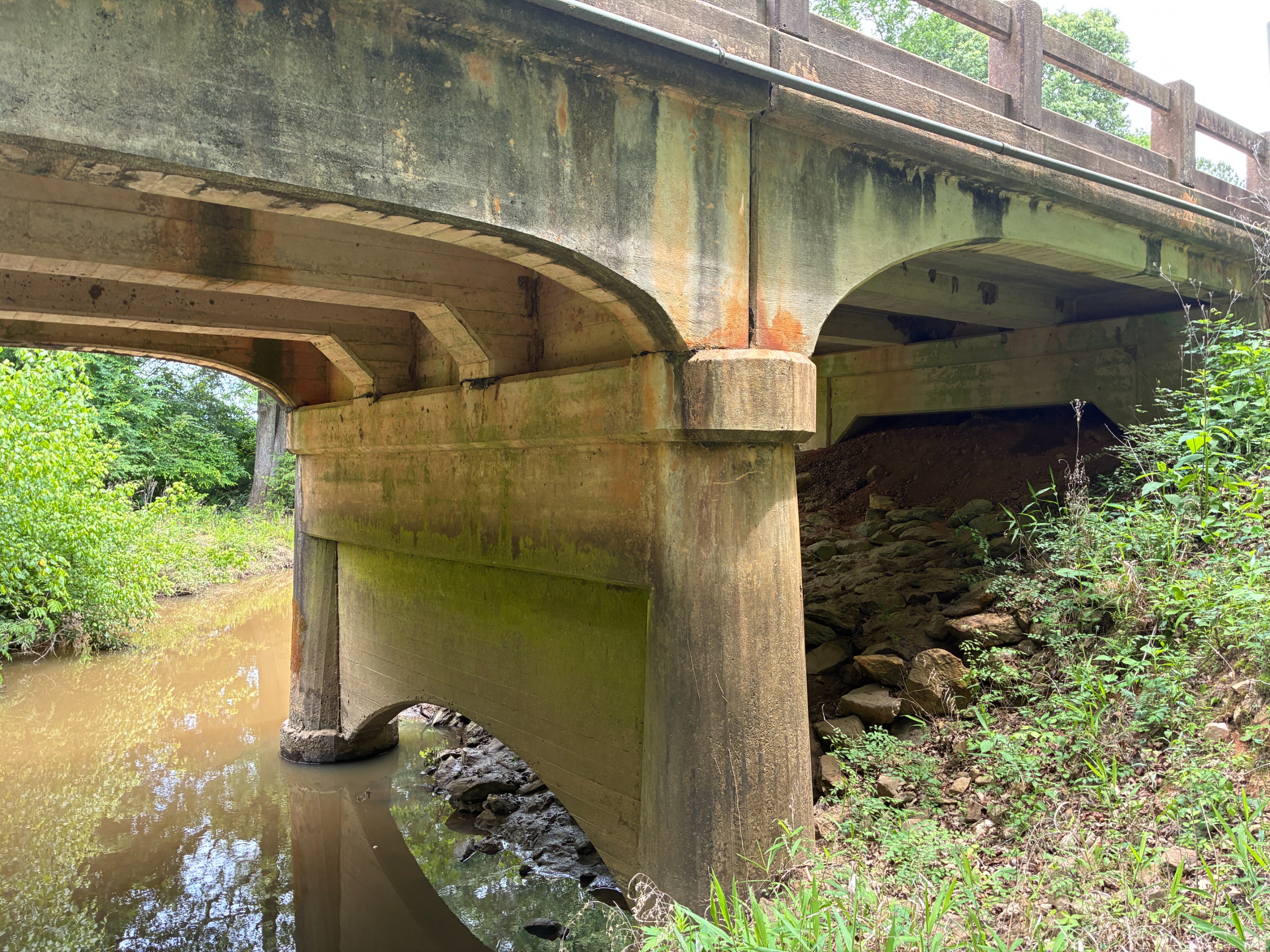
The custom design, 4 span, 180'-long and 20' wide T beam bridge is composed of four lines of beams and has asymmetrical span lengths and beam shapes.The main span over the stream is composed of 43'-long beams haunched on both ends.The beams in the adjacent spans are haunched on the interior ends only, and the west (far) span has straight beams.All spans appear to be simply supported on concrete abutments and two column bents.The bents at the stream have webwalls and articulated cap beams. The bridge is finished with two rail high concrete railings atop the brush curbs.
Signifcance
The continuous design T beam bridge was built in 1924 and stands as one of the earliest complete examples of the important bridge type. The reinforced concrete T beam bridge is believed to have been used by cities and counties in South Carolina prior to 1910.It is an adaptable bridge type as, in addition to custom designs, it could easily be standardized for relatively short span lengths.The fledgling state highway commission issued a set of standard plans for T beam bridges in 1917 (Standard Nos. S-201 to 204) with the earliest ones consisting of three or four lines of beams.The standards were updated for wider roadways in the late 1920s.The later examples usually consisted of four or more beams.Standard design T beam bridges became ubiquitous through the state during the 1930s and continued to be one of the Department’s workhorse standards through the 1950s.As common and important a feature of the early state highway system as the T beam bridge was starting immediately after World War I, no unaltered pre-1922 examples are known to exist. In 2012, the oldest complete example was the 1923 bridge over Coronaca Creek northeast of Greenwood in Greenwood County (2490003100100).The next oldest are two 1924 bridges on the original alignment of SR 7 between Calhoun Falls and Abbeville in Abbeville County (0170003200200 and 0170003200400).All three bridges are historically significant within the statewide context as one of the most important technological building blocks of the state highway system (Criterion C).
This example is also technologically significant (Criterion C) as an early application of the principles of continuity to a beam bridge.Continuous designs have significant economic advantages because they use less material (smaller section beams) for a given span length than simple spans (those where the beams do not continue over the piers).A simple span must accommodate the entire load within the span, whereas the continuous span distributes loads from bearing to bearing over two or more spans.Continuous designs also allow for the reinforced concrete deck to be continuous over the interior substructure units, thus reducing the number of expansion joints, which are frequent sources of deterioration and high maintenance costs.