SC 49/SC 215 CONNECTOR Bridge
Bridge No: 4440004909100
Asset ID: 465
County: Union
Bridge Name:
Facility Carried: SC 49/SC 215 Connector
Feature Intersected: Norfolk Southern Railroad
Year Built: 1930
Year Reconstructed:
Main Structure Type: Stringer
Design:
Main Material: Steel
Railing Type: 2 rail high concrete railings
Number of Main Spans: 4
Number of Approach Spans:
Approach Type:
Structure Length: 108 feet
Structure Width: 23 feet
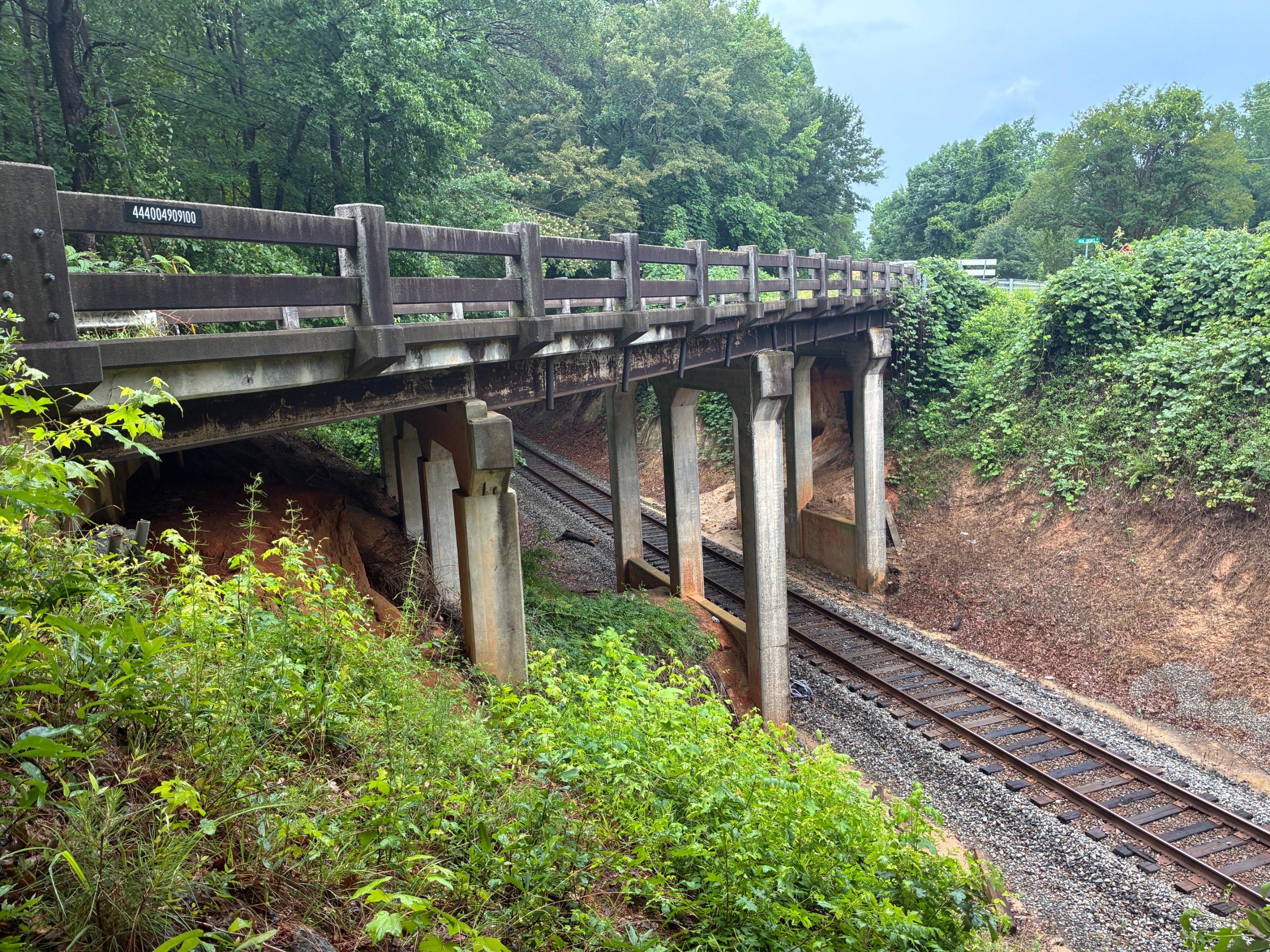
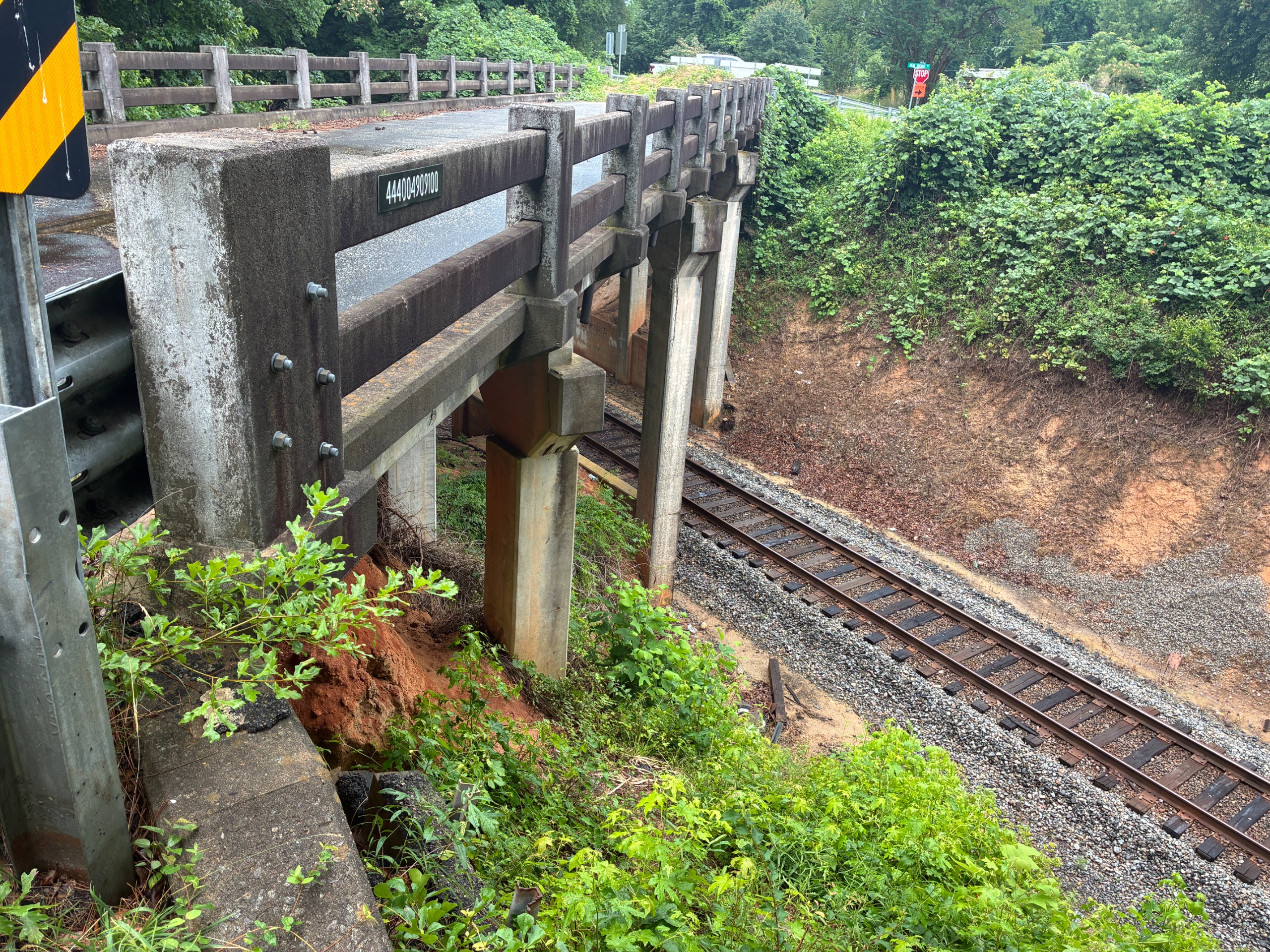
Setting: The bridge carries a 2-lane highway over a track of the Norfolk Southern RR located in a deep cut.The setting is rural.The rail line was established in the mid-19th century as the Spartanburg branch of the Columbia & Greenville Railroad.It was taken into the Southern Railway system about 1903 as one of two lines connecting its main line in western South Carolina with Columbia, and it continues in use as a Norfolk Southern freight line between Columbia and Spartanburg.
Bridge Description
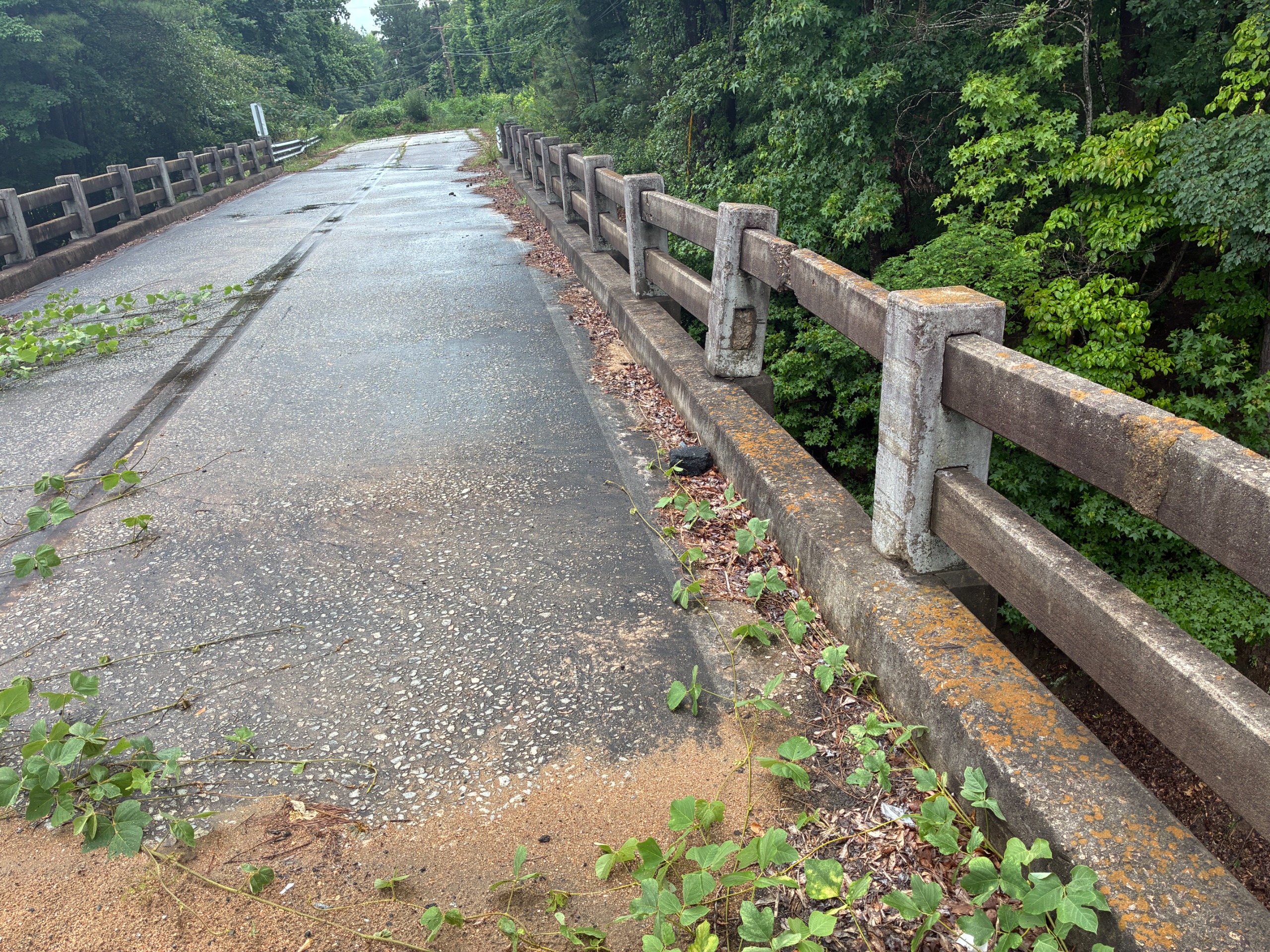
The skewed, 4 span, 108'-long steel stringer bridge has 27'-long span lengths and provides a 23'-wide bridge deck. The beams are supported on 3 column concrete bents, and those at the railroad track have crash walls.The bridge is finished with a concrete deck and standard design 2 rail high concrete railings on brush curbs.The railings have been hit and have lost original material.
Significance
The 1930 steel stringer bridge built by the state highway department is the oldest, complete example of the standardized design dating from the Capt. Barnwell era.Because of its completeness, the bridge is historically and technologically significant (Criterion C). The development of standard plans and specifications was one of the most significant accomplishments of State Bridge Engineer Joseph Barnwell and the Bridge Division between 1919 and 1935, the year he resigned because of chronic political interference.Although hardly innovative, the approach of standard plans as a starting point for state- and county-built bridges would guide the improvement of the state’s highway bridges through the 1950s, which makes early and complete examples historically and technologically significant.The reason that the standard plans worked so well was a marriage of technical, political, and economic considerations.The standard plans, which could be used repeatedly, allowed for quality control across the entire state.Cost comparisons and accurate estimates could be made from project to project, thus serving as a check on contractors.Accurate estimates were also paramount for building the credibility of state engineers with multiple constituencies, from county road commissioners to state legislators and state highway commissioners.State officials who were ever concerned with the budget and the allocation of funds to various counties or regions of the state.Innovative or untried, individualistic bridge plans tended to introduce unpredictable costs into a bridge project.The Commission’s minute books are filled with reports explaining why projects had cost overruns, often with typical justifications including weather-related delays, material-delivery delays, foundation conditions requiring longer piles, etc.In summing up Joseph Barnwell’s contributions to bridge building in South Carolina, Charles Moorefield, State Highway Engineer from 1917 until he retired for health reasons in 1935, wrote that Barnwell carried the Highway Department in its beginning to the definite purpose to give South Carolina her money’s worth in the bridges to be constructed.Barnwell’s legacy was indeed just that, hundreds of similar, economical, standardized bridges that form the backbone of the current state highway system.
The South Carolina State Highway Department’s earliest identified standard plans for steel stringer bridges were developed before 1924 for span lengths of 14' to 20' (Standard Plan Nos. S-301 to 303).By the late 1920s, steel stringers were becoming an ever more attractive alternative as continued improvement in the manufacturing process made beams available in longer lengths and greater depths at lower cost.The State Highway Department made increasing use of steel beams, using them in places where creosoted timber stringer, T beams or pony truss spans may have been used.Standard Plan No. 310, dated 1930, featured a 25' span length with a concrete deck and a timber pile substructure.Standard Plan No. 324, adopted in 1935, was for a 50'-long spans.During the 1930s, steel stringer bridges finished with reinforced concrete decks and standard concrete railings appeared in ever greater numbers on the primary highway system with this 1930 example surviving as one of the few that chronicle the introduction of the seminally important bridge type.